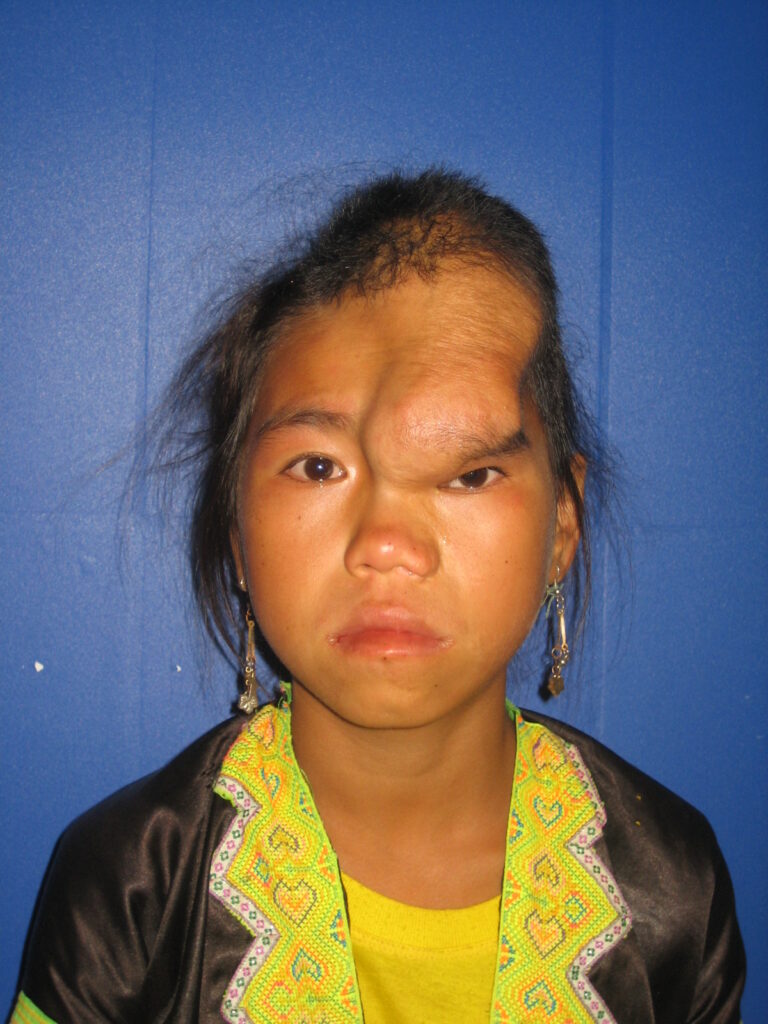
Fibrous dysplasia is a disease of bone caused by a rare genetic mutation of the fetus in utero. Bone cells of any bone may become affected but disease of the craniofacial skeleton is common. The normal bone tissue is replaced by fibrous bony tissue, either in a single bone (called Monostotic) or in multiple bones (Polyostotic). There is no medically effective treatment. Signs and symptoms usually include bone pain and/or deformity of bone volume and contour. Surgery goals in treatment are to remove, if feasible, all diseased bone and replace it with autogenous bone grafts. Because the optic nerve and other cranial nerves are at risk of impingement by this growing tumor, early surgery should be considered, often with the consultation of neurosurgery, ENT, ophthalmology and ,occasionally, oral surgery. If total resection is not feasible, reduction of tumorous bone should be undertaken with the goal of liberating nerve pathways and restoring normal size and shape of the craniofacial skeleton , particularly the orbit, nose, oropharynx and cranium. A rare variant of fibrous dysplasia, McCune Albright Syndrome, can involve skin hyperpigmentation and hormonal changes. CT scan is the foremost test to confirm the diagnosis of fibrous dysplasia, followed by bone biopsy.