History
Neurofibromatosis, or, what we commonly call NF1, is an autosomal dominant genetic condition of chromosome #17 which leads to formation of tumors of skin and all other parts of the body. Approximately 1 in 3000 persons are affected. One half of all cases are spontaneous mutations, the rest of patients having inherited the gene from a relative. The original descriptions of the disease were by Von Recklinghausen in the 1860’s. The lesions he described were mainly of the skin, which represent the majority of patients with NF1.
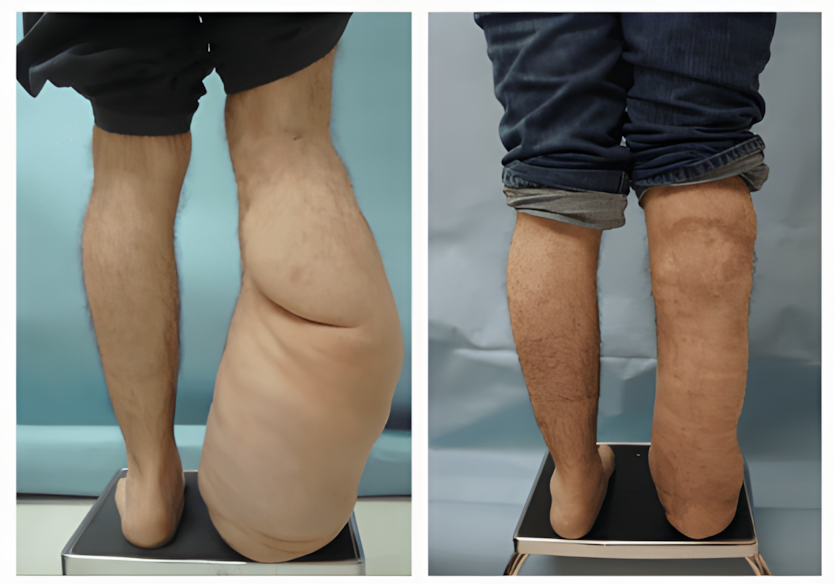
Other NF1 tumors which can emerge in both skin and deeper areas of the body are called plexiform tumors. These tumors, once they have appeared, have a strong tendency to grow unpredictably, similar to other solid tumors. Plexiform tumors also have the ability (5-10%) to transform into a malignant form of NF1 called Malignant Peripheral Nerve Sheath Tumor (MPNST). These tumors present the greatest risks of pain and damage to a patient’s normal tissue and functions.
Surgery
The history of surgery for resection of cutaneous NF1 tumors is mostly successful since they are easily accessible and small, although recurrence of tumor has been a problem for many patients. Surgery of plexiform tumors has a history of significant blood loss, high recurrence of tumors and unintended but permanent injury to normal nerves and tissues. This history has nurtured a wariness by pediatricians and surgeons to postpone surgical attempts at removal until after puberty or until serious morbidity from the tumors is present. This default strategy results in significant morbidity and suffering for patients since unchecked tumor growth is the usual result of no surgery.
Dr. McKinnon’s Experience
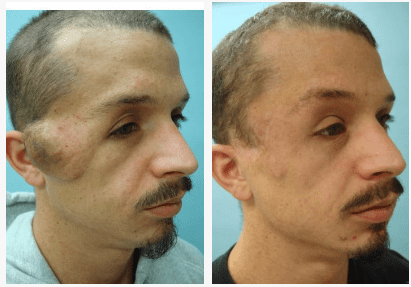
Over a 40 year experience of treating over a thousand patients with NF1, I have observed that “radical” resection of plexiform NF tumors has resulted in permanent “non-recurrence” of nearly all tumors. This includes even tumors over 50 pounds and some MPNST tumors. In children, who have enormous growth spurts until the end of puberty, there is no certainty of permanent surgical results. However the successful logic gleaned from radical surgery in adults has been successfully applied to a large pediatric population, and without facial mutilation, even if surgery may need to be repeated during growth. This success also depends on preservation of normal motor nerves and other normal tissue during the resection of NF tumors.
Pathology of Craniofacial NF1 Tumors
Most facial and frontotemporal scalp tumors derive from sensory branches of cranial nerve V. The ophthalmic division of the trigeminal nerve includes some sensory nerves that are within the musculofascial cone (annulus of Zinn) of the orbit. This area presents special risks of injury to the optic nerve and the extraocular muscles and should be avoided in surgery.
Orbital NF is often (even from birth) accompanied by a defect of the sphenoid bone greater wing. This defect may permit herniation of the temporal lobe of the brain into the orbit and subsequent orbital dystopia, pulsation exophthalmos or enophthalmos, and pressure on the globe and optic nerve. Destruction of bone, ligaments, fascia, muscle and skin may also be present.Tumor confined to the optic nerve (optic glioma) deserves neurosurgical management.
It is important (and an original observation by Dr. McKinnon) to understand that motor nerves are not intrinsically involved with NF tumor. NF tumors of the mandible, parotid gland, ear and temporal scalp develop largely from the mandibular division of the trigeminal nerve, including the auriculotemporal nerve. Tumors of the neck and posterior scalp derive from upper cervical sensory nerves (C1-C4), including the occipital nerves. Lower cervical nerves (C4-C8, sensory and motor) constitute most of the brachial plexus.
Trunk and Extremity
Plexiform NF can exist anywhere from the spinal cord to the sensory nerve terminus in the skin, bone or viscera. Plexiform tumors most commonly appear between the deep fascia and the skin but may involve and destroy skin, muscles, bones, joints, and visceral organs. Careful dissection proximal to the tumor mass (towards their CNS origin) often reveals the specific sensory nerve tumor origin. Large truncal lesions over time can develop paraspinal hypervascularity. This can resemble an arteriovenous malformation. Scoliosis of the spine is common with posterior trunk lesions, and limb hyperplasia is common with extremity lesions. These pathologic patterns of NF tumor evolution reinforce the importance of early detection and resection of the tumor.
Patient History And Physical Findings
The myriad presentations of NF tumors should not deter accurate diagnosis, even in infancy, by the observant neurologist or experienced surgeon. If doubt exists of the diagnosis, a biopsy should be performed with exception at least of the optic nerve and brain.
Physical findings are too numerous to justify an inclusive list, but palpable tumor, pain or confirmatory imaging should precede surgical intervention in virtually all cases.
Imaging
Pediatric patients with suspicion of plexiform tumor should have an MRI study, preferably with and without contrast. MRI of the CNS is appropriate as an early screening measure for all NF patients, even those without known tumors. T2 and STIR-weighted images usually give the clearest depiction of NF tumor.
MRI, especially with higher Tesla power, can frequently reveal the specific cranial or spinal nerve involved with tumor. This information (nerve mapping) should be sought out with the aid of a neuroradiologist.
High-resolution CT scans should only be ordered when and if the patient with skeletal destruction or high risk of skeletal pathology is being evaluated preoperatively.
Differential Diagnosis
NF tumors have been mistaken for vascular malformations, particularly by their hypervascular imaging on CT or MRI.
Hyperpigmentation of NF lesions has been confused by the inexperienced physician with congenital nevi. A biopsy can readily produce the correct diagnosis.
Most patients, even infants, with NF will present with at least three or more cutaneous lesions and/or cafe au lait lesions, axillary freckling, ocular Lisch nodules or a subcutaneous plexiform mass.
Congenital upper eyelid ptosis can usually be differentiated from NF-derived ptosis by detection of an orbital mass, presence of enophthalmos or exophthalmos, and by MRI findings. Rapid increase of ptosis may be associated with orbital malignancy such as Rhabdomyoscarcoma, for which immediate incisional or excisional biopsy is required.
Diagnosis of MPNST or other orbital malignancies cannot be reliably made by symptoms, by imaging or by clinical examination. If MPNST is suspected, the tumor should be resected rather than biopsied in most cases.
Nonoperative Management
Because it is controversial, observation of growing, observation of growing NF tumors is patently non therapeutic yet may be justified if surgery is high risk, the patient has significant comorbidity, or the tumor has not reached a level of irreversible morbidity to vital structures. The surgeon and his or her medical colleagues should be prepared to intervene to prevent irreversible morbidity, even in young patients.
Preoperative Planning
Pertinent consultations with other specialists should be completed well prior to surgery, if feasible. Adequate warning to blood bank and ICU is made.
Approach
Orbital tumors are approached via coronal, superior lid crease and transconjunctival incisions as needed. Inferior orbital nerve (maxillary) tumors are accessed via a lower eyelid incision as in orbital floor exploration or via a nasojugal incision.
The surgeon should anticipate repeat procedures (i.e., a subciliary incision is always a higher risk for ectropion).
Posterior trunk tumors should be accessed via incisions that can resect not only the palpable tumor but also any feeding paraspinal sensory nerves.
General Principles
The first priority of surgery in the child with NF is resection of tumor and reconstruction of bony defects. Large tumor resection can be aided by cautery devices such as LigaSure, but the surgeon should also be facile with vascular surgical techniques.
Autogenous bone reconstruction is superior in virtually all cases to alloplastic reconstruction and homografts, especially in the growing child.
Because resection of cranial nerve V tumors into the cavernous sinus is dangerous (and some tumor will necessarily remain there), reconstruction of the sphenoid defect should be undertaken with a combination of bone and metallic plate/mesh to ensure permanence of brain-orbit separation (even in the enucleated patient). Bone should face the orbit to allow possible attachment of the levator muscle origin .
Early ptosis correction is important to avoid amblyopia, but definitive ptosis correction should be performed when the child can tolerate a non- general anesthetic for refinement of the correction by patient participation and the tumor is not significantly present.
When approaching a large plexiform tumor, the surgeon should begin dissection in normal tissue and proceed to identify the plane at the tumor margin. Motor nerves that are within the tumor field should be identified by direct nerve stimulation and reconfirmed to be normal at conclusion of surgery.
Why Choose McKinnon Plastic Surgery For Neurofibromatosis Treatment?
Neurofibromatosis surgery requires specialized knowledge of nerve anatomy, tumor behavior, and reconstructive techniques. Dr. McKay McKinnon has over four decades of experience treating patients with NF1, including complex plexiform tumors affecting the face, scalp, trunk, and extremities.
His surgical background includes extensive experience in craniofacial and reconstructive surgery, allowing him to address both tumor removal and reconstruction of affected tissues. Dr. McKinnon’s approach emphasizes accurate diagnosis, careful surgical strategy, and preservation of normal motor nerves whenever possible.
Because NF tumors often affect multiple anatomical structures, treatment frequently requires coordination with other specialists and careful preoperative planning.
Neurofibromatosis Treatment In Chicago, IL & Coral Gables, FL
Neurofibromatosis can cause tumors that affect the skin, nerves, and deeper structures throughout the body. Patients in Chicago, IL, and Coral Gables, FL, seeking evaluation or treatment for neurofibromatosis can contact McKinnon Plastic Surgery at (312) 335-9566 in Chicago or (305) 753-1400 in Coral Gables to schedule a consultation.