Encephalocele is a rare congenital condition in which brain tissue and protective membranes protrude through an opening in the skull. This condition develops during early fetal development when the skull does not fully close, allowing part of the brain and surrounding tissue to extend outside the cranial cavity. Because encephaloceles involve both the skull and the brain, treatment requires highly specialized surgical planning.
At McKinnon Plastic Surgery, surgical treatment for encephalocele is performed by Dr. McKinnon, a plastic surgeon with extensive experience in craniofacial reconstruction. Dr. McKinnon completed advanced craniofacial fellowship training in Paris under Dr. Paul Tessier, whose work helped establish modern craniofacial surgery. His surgical background includes complex craniofacial procedures involving the bones and soft tissues of the skull and face.
What Is Encephalocele?
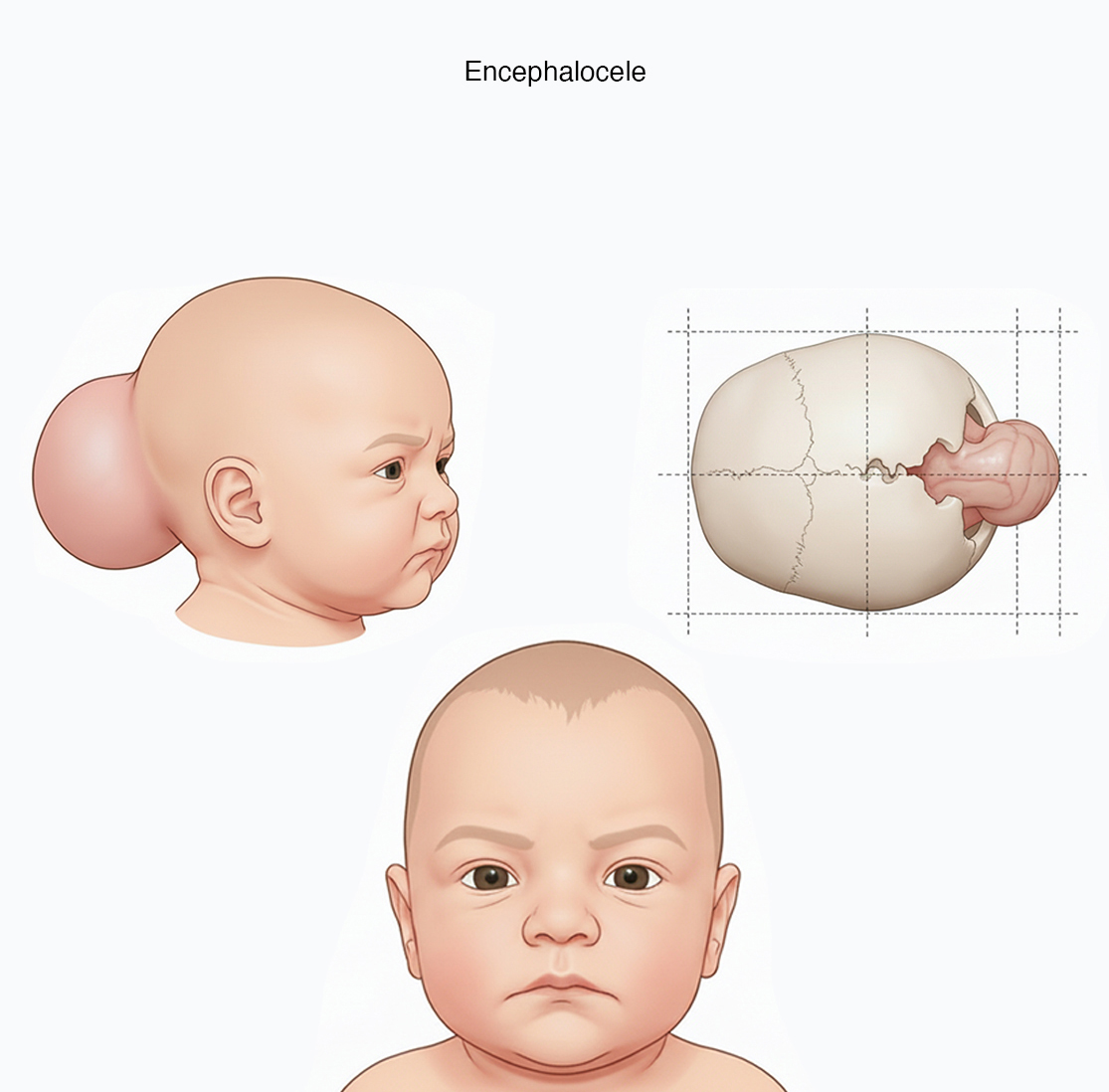
Encephalocele is a type of neural tube defect that occurs when the skull does not fully form during early fetal development. As a result, brain tissue and the protective membranes surrounding the brain may protrude through an opening in the skull.
The condition most commonly occurs along the back of the skull, but it can also appear in the forehead or facial region. The size and severity of an encephalocele can vary widely depending on how much tissue is involved.
Because the condition affects both neurological structures and skull development, treatment often requires coordination between craniofacial surgeons and neurosurgeons.
Types Of Encephalocele
Encephaloceles are classified based on their location on the skull.
Common types include:
- Occipital encephalocele, occurring at the back of the skull
- Frontal encephalocele, involving the forehead region
- Basal encephalocele, located deeper within the skull base
The location of the encephalocele influences both the surgical approach and the potential impact on surrounding structures.
How Is Encephalocele Diagnosed?
Encephalocele is often identified during pregnancy through prenatal ultrasound, which may reveal an opening in the skull or protruding tissue. In some cases, fetal MRI may be used to provide a clearer view of the structures involved.
After birth, imaging studies such as CT scans or MRI help confirm the diagnosis and allow physicians to evaluate the skull defect and surrounding structures. These studies guide surgical planning and help determine the most appropriate treatment approach.
Surgical Treatment For Encephalocele
Surgery is typically required to repair the skull opening and reposition or remove the protruding tissue. The primary goals of treatment are to protect the brain, close the skull defect, and support normal cranial development.
During surgery, the protruding sac is carefully addressed and the skull opening is reconstructed. The procedure involves removing the herniated tissue and bone grafting the bone defect.
Because the brain and skull are closely involved, encephalocele repair is often performed in coordination with neurosurgical specialists.
Surgery Timing
Surgical repair of encephalocele is usually performed during infancy after careful evaluation of the child’s overall health and the structures involved. Early treatment helps protect the brain and support normal development of the skull.
The exact timing of surgery depends on the size and location of the encephalocele and whether other medical considerations are present.
Why Choose McKinnon Plastic Surgery For Encephalocele Treatment?
Encephalocele repair requires advanced expertise in craniofacial reconstruction due to the complexity of the skull and surrounding structures. Dr. McKay McKinnon has spent decades treating congenital craniofacial conditions involving the bones of the skull and face.
After completing his plastic surgery residency at the University of Miami, Dr. McKinnon pursued specialized craniofacial fellowship training in Paris under Dr. Paul Tessier. His surgical career includes complex craniofacial procedures involving skull reconstruction, congenital facial differences, and tumor-related reconstruction.
Dr. McKinnon personally performs craniofacial surgical procedures with careful attention to protecting neurological structures and restoring the structural integrity of the skull.
Encephalocele Treatment In Chicago, IL & Coral Gables, FL
Encephalocele requires specialized craniofacial evaluation and surgical treatment to repair skull defects and protect neurological structures. Patients in Chicago, IL and Coral Gables, FL seeking expert treatment for encephalocele can contact McKinnon Plastic Surgery at (312) 335-9566 in Chicago or (305) 753-1400 in Coral Gables to schedule a consultation.